Mamiya C330 Serial Numbers Rating: 7,3/10 565 votes
Shop B&H's in stock, large inventory for fast shipping, great service and everyday low prices on mamiya digital backs. For more info, please call 800-947-4415. Find many great new & used options and get the best deals for 【TOP MINT Blue Dot】Mamiya C330S S TLR Camera SEKOR DS 105mm f3.5 Lens from JAPAN at the best online prices at eBay! Free shipping for many products!
The Mamiya C220 Professional TLR is an engineering marvel and I haven’t found anything about it that I don’t like. Well, not much – they knew how to make cameras in the 1970’s.Unlike its mightier and later RZ 67 cousins, this camera is easy to use out of the studio and in the field. It’s lightweight by comparison (a mere 1,553 grams) and photographers could easily take them out into the street and the landscape, and make their fair share of square imagery.
For me, this is a more accessible way into the square format than going the Hasselblad route, a camera I’ve always promised myself. Oh well.I took the plunge in Autumn 2013 and hit the beach and the woods after pondering for a good while about ‘the square’!
As a landscape photographer (as I call myself) could I see myself working with the constraints of the 6×6 format? Then I read somewhere that, all we have to think about is that every album cover being proof that some excellent square images can, indeed, be made. About the Mamiya TLR SystemThis is a Twin Lens Reflex (TLR) camera that takes 120 roll film, and, typically for this format, it shoots 12 exposures per roll (24 on 220 roll film if you can find it anywhere!) The “System” bit comes from the fact that you can change the stock 80mm lens for others in the range – 45mm all the way up to 250mm.The camera is unique among TLRs in that it focuses using a large bellows system, allowing you to capture subjects at very close distances (more on this later). The C220 Professional was an evolutionary step in the Mamiya ‘C’ line of TLRs, which started with the Mamiyaflex C in 1956 and continued through:. Mamiyaflex C2 (1958-62).
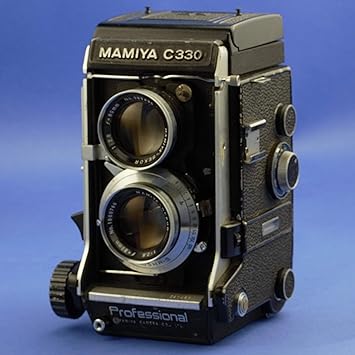
Mamiya C3 (1962-65). Mamiya C33 (1965-69). Mamiya C22 (1966-68). Mamiya C220 (1968-82). Mamiya C330 (1969-74). Mamiya C330f (1972-82).
Mamiya C220f (1982-95). Mamiya C330s (1983-94)Each evolution introduced new features (as described here) and updates to the build. The most useful feature, as mentioned above, is the fact that you can, almost exclusively in the world of TLRs, change the lenses. It’s interesting to note that all lenses can be used with all bodies and some of the later bodies in the C220 and C330 series also alow focus screens to be interchanged between models.
The Mamiya C220 Professional bodyThe body is fitted with a waist level finder as standard. This means that you look down onto the focusing screen, where you see a laterally reversed (flipped) image. Being a TLR, the image you see on the focus screen comes from the topmost lens, whereas the bottom lens is the one used for capturing your image on film.As you look down, you will see the focus knobs jutting out from the front left and right. These fall perfectly into place when hand-holding the camera. They are linked, so work simultaneously. Mamiya C220 Professional TLR – Figure 1 – Right viewHere we have the (folded) film advance crank (just over 1 and a half turns to move to the next frame), an indication of the film length loaded, the frame counter and a switch will allow for multiple exposures. The multiple exposure switch can be moved from the ‘Single’ to the ‘Multi’ position if that’s your bag.
Regarding film length (120 or 220), this has to be set manually to ensure the correct frame counters (12 or 24 exposures) are displayed.The shutter trigger mechanism is on this side too and you can use either a standard cable release or press down on this release mechanism. When the camera is set to the “Single” position, an interlock on the camera prevents the button from being pressed after a shot has been taken until the crank has been wound to the next frame. Mamiya C220 Professional TLR – Figure 2 – Left viewOn the left of the camera from this viewpoint is the ‘cold-shoe’. If you use it to mount a flash, it must be triggered via the PC socket on the side of the lens. Also on this side is a selector switch that must be used in order to remove the lens assembly.The camera has no meter but does provide an exposure compensation indicator, which is engraved on a plate on the side of the camera along with the parallax correction scale. I have no experience of using these myself. Mamiya C220 Professional TLR – Figure 4 – Bottom view FocusingThe camera uses a rack and pinion bellows focusing system, so if close up is your thing, you’re in for a treat.
The 80mm ‘standard’ lens focuses to 35 cm (the 55mm will go to 24 cm). At close camera-to-subject distances, you can allow for parallax compensation (the shift in field of view between the taking and the viewing lens) with a remarkable contraption called the “Paramender”. Loading filmLoading film is a breeze (in comparison to even my Bronica, and more so the Hasselblad), as it is pulled from the spool straight up the back of the camera into to the take-up spool. There is no threading the backing paper under rollers or back on itself. The spools slot in easily as the take-up spool ‘pins’ can be pulled and locked out of the way until the roll is seated.And now, the best bit The Mamiya C lens systemThe advantage these Mamiya’s have over the TLR opposition – even the sought after variants of the Rolleiflex – is that the twin lenses are interchangeable – mid-roll if you wish. In this regard, it’s like the poor persons Hasselblad, indeed, even the default waist level finder can be swapped out – or even enhanced.There are 10 lenses generally available, from a 55mm f/4.5, through the 80mm f/2.8 right up to a 250mm f/6.3 (some focal lengths having more than one variant). The lenses take either a 46 or 49mm filter (which is economical – a step up ring only being required to enable one set of filters to cover all these lenses).By dint of an internal blind to hide the film, and a stiff wire catch on the front, the lens sets can be removed and changed for another focal length, as easy as that.
The lens set can’t be removed until the selector is moved to ‘Unlock’, and a red ‘flag’ appears in the viewfinder to indicate that the lens is being changed.The lenses use leaf shutters which have to be ‘cocked’ manually before exposure and the standard 80mm f/2.8 that I have has a Seiko shutter range of 1/500 to B and click stopped apertures up to f/32 (though they can be set between stops too). The newer C330 models provide an automatic lens cocking system. These lenses also have an M-X flash selector too – (‘M’ would have been for flashbulbs – remember them? – and ‘X’ for electronic flash. Being a leaf shutter design, the flash synchronises at all shutter speeds.
I plan to get the 55mm f/4.5 at some point (around a 35mm equivalent focal length in 35mm film terms) in order to make my landscape work a bit more flexible. AccessoriesQuite apart from the lens range noted above, the camera is able to take a range of accessories, with a range of finders available, an eye-level finder, one with a Cds photocell (Porrofinder), for exposure measuring, magnifying hoods and sports finders.
Mamiya C220 Professional TLR – Marram GrassFrom a landscape perspective, think of a lone tree in a field. The same is true of portraits of course. I feel this is actually true, but it’s also a bit of a cheat! For me, the trick is that the rules of composition are still true, and you still need a ‘subject in its surroundings’ approach.
So, would that tree below be better to one side, in order to show that it sits on the edge of a quarry for example, or would the portrait be better, more ‘relaxed’, if the subject was to one side?I try to use this when out shooting. Mamiya C220 Professional TLR – Roseberry ToppingThe camera is smooth as silk to use, a joy to carry around and hardly gets in the way once you get that hang of the shooting sequence, so enjoy yourself with it and remember, only 12 shots per roll, so there won’t be any ‘sprayin’ and prayin’.I meter exposure with my trusty, and excellent, Weston Master V – get one!
In summary ProsThis camera has just the right amount of weight behind it to make it a comfortable carry around camera, its mechanically smooth and everything falls to hand easily, and the viewfinder is bright enough to be useable in most conditions. ConsAs the viewfinder shows what you see through the top, ‘viewing’ lens, using graduated filters or, to a lesser extent, polarizers are nigh-on impossible with any degree of accuracy, but I guess print film has a certain exposure latitude which may render this no too problematical, but I’d watch out with reversal film!The genuine, as supplied, Mamiya strap that I have is a bit of plastic awfulness, so stiff it doesn’t easily run through the lugs through which it is threaded, and more often than not gets in the way.And that’s as bad as it gets! Share your knowledge, story or projectAt the heart of EMULSIVE is the concept of helping promote the transfer of knowledge across the film photography community. You can support this goal by contributing your thoughts, work, experiences and ideas to inspire the hundreds of thousands of people who read these pages each month.If you like what you're reading you can also help this personal passion project by heading on over to the and giving as little as a dollar a month. There's also, currently showcasing over two dozen t-shirt designs and over a dozen unique photographs available for purchase.
Despite having been around for half a hundred years, shooting images for at least 30 of those, I would say that I haven't settled on a single genre of photography. I call myself a landscape photographer, and this will always be my calling, because my formative years were spent in the hills of northern England, but, as you can see from my timeline, I turn my lens on a wide range of subjects.I think this is a 'good thing'.Heartened to see that my eldest teenager is now getting into this art form (and she has quite an eye), so something has rubbed off.
Another good thing. There are a number of possibilities for spacing issues. But first and easiest to fix thing that could be your problem is that the pressure plate is set for 220 film. Modern Mamiya TLRs could handle both 120 and 220 films, and there are two settings to change, the film counter, and turning the pressure plate. I’ve owned about half a dozen Mamiya TLRs and have never had spacing issues on mine. All of my Eastern Block cameras did have a spacing problem to one degree or another (Kiev 60, Exacta 66, Pentacon 6.). The Mamiya C220 was my first camera- a present from my dad in the mid 1980’s when I was in my teens.
I’ve owned a few of them and most of the lenses over the years and it’s one of my all time favorites. I am now using a C330 and recently bought a C220 for my daughter who is roughly the same age as I was when I got my first.One thing I’d note that is a plus to the TLR system is if you like shooting long daylight exposures. You can put really deep ND filters on the taking lens, yet compose normally with the viewing lens.
And the Mamiya system uses “normal” screw in filters unlike many other TLR systems that use “Bay” filters. I was shooting yesterday with my Mamiya and a Hoya 9stop ND plus a red filter that allowed me to take a 83 second (including compensation for reciprocity failure) exposure even though the sun was out.
With ND filters it’s fun to be able to get the clouds to smear around and water to go flat, and that’s much easier with the TLR system than with SLRs. Having used a C220, C330 and C220f, my favorite is by far the C220 (and f). While it is only a single data point, with the C330 I had, the camera mechanics occasionally jammed up due to the integrated film advance/shutter cocking mechanism. With the C220 and C220f, I appreciate that these mechanisms are.not. linked. Both C220s I’ve used always gave perfect spacing of the images on the film roll, while with the C330 I had all sorts of film spacing issues–often getting only 10 or 11 shots instead of 12 on the roll. While I know the C330 is the “top-of-the-line” for this camera series, I find there is an excellent weight and mechanical argument in favor of a C220 variant!

Download 103 Free Dotted Fonts. 1001 Free Fonts offers a huge selection of free Dotted Fonts for Windows and Macintosh. Download Free dot Fonts for Windows and Mac. Browse by popularity, category or alphabetical listing. Download Free Fonts for Windows and Macintosh. Browse by popularity, category or alphabetical listing. We use cookies to analyze how you use our site and show ads related to your preferences. Dotted fonts free download - Fonts Manager, Fonts, 17 Handwriting Fonts, and many more programs. Download Dot Font font for PC/Mac for free, take a test-drive and see the entire character set. Moreover, you can embed it to your website with @font-face support. Download dot font for mac.
Firstly, a fine review for a great camera. But something is niggling me!“This camera has just the right amount of weight behind it to make it a comfortable carry around camera”I have one of these cameras, and can say with some certainty some people won’t find that to be the case. It is a hunk of metal weighing 1.5kg plus. Add one of the longer lenses to take it to 2kg. Add a second lens and you have got some serious heft to lug around with you all day!To give it some modern context, a full-frame DSLR like the Canon 6D and a 70-200 f/4 IS weigh the about same as the standard model c220.