The History Of Snowboarding

The History Of Snowboarding

The History Of Snowboarding Rating: 8,7/10 7592 votes

Snowboarding is a winter sport that includes just one piece of equipment - a snowboard. I intend to cover their history's, their levels of difficulty, their images, and follow up these aspects with a conclusion. History History of Downhill skiing Remnants of skis found in Norway and Sweden date from more than 4,000 years ago. Oct 06, 2019  The History of Snowboarding Continues? The history of snowboarding shows how humble, rocky, and exciting the sport can be. If you’re snowboarding, you?re making history in the snowboarding world. New technology and safety features make snowboarding a fun and safe sport for the whole family.

Tomb rider 3 download. I actually put this together for a different purpose, but I figured some of you guys might be interested. I should warn you it is quite lengthy, but it’s intriguing.The history of snowboarding is actually quite controversial. Some claim that what is said today has its fictional aspects because some key factors have been either left out or inflated for corporate gain. Others will say that the early pioneers of snowboarding themselves have either not been given enough credit or have been given too much. This all is a typical example of how time, the retelling of stories and media will affect our perception of history. It is important that we understand where we came from in all aspects of life but sadly many genres have been the victim of these circumstances. This account is merely one understanding of where snowboarding came from to help future shredders be aware of their roots.1929- M.J.

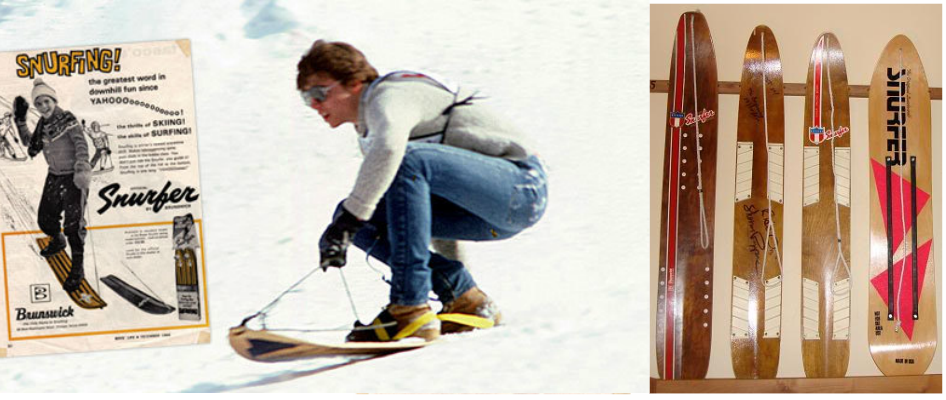
“Jack” Burchett creates the first recorded snow device that resembles a snowboard. His snowboard was made up of a plank of wood, clothes line to secure his feet and horse reins to hold on to.1964-Sherman Poppen dreams up a way for his young daughter Wendy to surf on the snow.

He bolted two kids skis together and attached a rope to the nose to give the rider stability. Sherman would later call his invention the (snow+surfer) Snurfer, a name his wife came up with.1965- After becoming a huge hit with the neighborhood children, Sherman licenses a bowling ball manufacturer to begin production of the Snurfer. Over half a million Snurfers sold in the first year at $15 apiece.1969-Dimitrije Milovich is struck with the idea to create some type of snow board after sliding around on lunch trays at college in upstate New York.1971- Dimitrije patents his idea to sell to ski companies. He had previously teamed up with surfboard maker Wayne Stovekin to bring his snow. Board idea to life.

They used the general design idea of the new short surfboards and added a metal edge. Dimitrije gives all the credit to Wayne saying that he was the first real snowboarder and snowboard maker.The metal edge Dimitrije and Wayne had originally added to their snowboard design was later removed because it wasn’t seen as necessary for the powder they were riding the boards in. The guys also played around with their snowboard design by using nylon straps and laminating glass and gravel on the board.1972- Dimitrije starts the very first snowboard company ever, called Winterstick. He had dropped out of college and headed out to Utah to test his boards in some amazing powder. Also in this year Bob Webber finally gets the patent he has been trying to get for years for his Skiboard.1974- Winterstick uses P-Tex as a base for their snowboards.1975- Snowboarding gains a big break in popularity when Newsweek, Playboy and Powder all write articles about Winterstick and their snowboards.1976- Though they weren’t very popular Dimitrije takes his snowboards to the SIA (Snowsport Industries America) and NSGA (National Sporting Goods Association) tradeshows. Winterstick also introduces the Swallowtail snowboard to the market.1977- Several people start producing snowboards this year.

Jake Burton, who had finished college, moved to Londonderry, Vermont to start a snowboard company and experiment and add his own ideas to the Snurfer. Tom Sims and Chuck Barfoot partner up to make snowboards. Chuck, the one that actually made the snowboards for Tom, works with Bob Webber who came up with the Yellow Banana that was made of polyethylene.

Chuck tweaks the Yellow Banana design and calls his version the Flying Yellow Banana and it is sold under the Sims company as the Skiboard.1978- Chuck Barboot started using fiberglass in producing his snowboards.1979- Sherman Poppen stops production of the Snurfer and goes back to his original profession as a chemical gasses engineer in his home town of Muskegon, Michigan. Even though Sherman wasn’t in the game anymore it was an exciting year for the annual Snurfer contest held in Michigan.Jake Burton came to enter the contest with his own equipment. After much protest an open division was created. Jake was the only person to enter the division that year and he won. Also at the Snurfer comp.

Paul Graves, a pro surfer, puts on a freestyle show for everyone by doing sliding 360s, bending down to one knee and doing a front flip off his board at the end. Paul also appeared in a LaBatt’s beer commercial riding a Snurfer, which sky-rocketed snowboarding’s popularity.And let’s not forget the very first halfpipe was discovered in Tahoe City by Mark Anolik. This new snowboard feature attracted big time skateboard photographers and well known snowboarders.1980-Dimitrije Milovich leaves the snowboarding business, but he will always be seen as an important pioneer of the snowboard industry. Jake Burton uses ski technology on his snowboards by using P-Tex for a base.

Tom Sims signs a huge deal with Vision Sports for his skateboards and snowboards, but he leaves Chuck Barfoot out.1981- Even though it was small the very first snowboard contest was held in Leadville, Colorado. After being left out of the deal with Tom Sims, Chuck Barfoot started his own company but would not succeed.1982- Paul Graves takes the initiative to organize the very first National Snowboarding Championships at Suicide Six Ski Area at Woodstock, Vermont.

This contest was a downhill race to the bottom where competitors were clocked at 60 mph. The contestants, that included Jake Burton and Tom Sims, were using Snurfers, Burton boards and Sims boards. The event was covered by Sports Illustrated, Good Morning America and the Today Show. Doug Bouton, a Burton team rider, took home the honors of best overall.1983- Jake Burton and Tom Sims both start their own competitions. Burton held the National Snowboarder Championship in Vermont and Sims held the World Snowboarding Championship in the Lake Tahoe area. Sims included a halfpipe event in his contest which many snowboarders didn’t like and threatened to boycott the competition because the final scores would include the halfpipe scores.

This disagreement would forever change snowboarding by creating two types of riders.1984- The European ski company Nidecker hops on the band wagon when they produce their first 50 snowboards that feature a 3D base and fins.1985- The first snowboard magazine, Absolutely Radical, is founded, but is later renamed International Snowboarding Magazine. Burton finally brings back the steel edge on the Performer. Snowboarding is also not as widely accepted as the riders would hope. It is estimated that in this year only 39 of 600 ski areas would allow snowboarders. Most ski areas didn’t allow snowboarders because they were considered dangerous to skiers. Some tried to use the excuse that their insurance wouldn’t cover snowboarders, but that was quickly found out to be a lie.

It is thought that the biggest reason they were not accepted was because of their skateboarder clothes and crazy hair colors.1986- European snowboarding gains massive popularity when French snowboarder Regis Rolland stars in “Apocalypse Snow”. In response to this new found popularity Europe puts together their own events such as the Swiss Championship in St. American snowboarding also gains a lot of attention when the World Championships in Breckenridge bring in big money for the town and the resort. Other resorts that have a ban on snowboarding are sure to take notice of this.1987- Jose Fernandes wins the Giant Slalom in America at the World Championships. This one of the first big steps in Europeans stepping into the American snowboard scene.

France and Germany also got to celebrate as Jean Nerva and Peter Bauer take home wins. Not only were European riders making a scene in America, back over the pond the first European Snowboard World Championship was held in Livigno.1988-The International World Cup Tour gets its start and is won by Peter Bauer.

Chuck Allen, a surf coach, creates the USASA (United States Amateur Snowboarder Association).1990- The ISF (International Snowboard Federation) is put together.1994-Snowboarding gets declared and Olympic Sport!1998-In Nagano, Japan the first snowboard competitions are held at the Olympics in halfpipe and giant slalom. The very first men and women snowboarding gold medalists were Gian Simmen and Nicola Thost in halfpipe, and Ross Rebagliati and Karine Ruby in giant slalom.Big things have happened in snowboarding since then, and big things will continue to happen in snowboarding as riders continually push the limits of their time.

Each of the hundreds of snowboard brands will be on the continuous search to improve the quality of their gear and introduce new technology to the industry. No doubt snowboarding will constantly be changing and moving forward but the foundation of snowboarding is sure to never change as riders are out to simply enjoy themselves in the great white outdoors.

An advertisement for the SnurferWhile snowboarding became popular in the 1990s, its origin goes back to the early 70s, and probably much earlier than that. The Colorado Ski and Snowboard Museum asks, “How old is snowboarding, anyway?

Well, the short answer is: no one really knows.”Still, we like to make sense of our origins, and since this page has proven to be one of the most popular ones on the Grays on Trays website, let’s get started. Here’s our attempt to make sense of it all.A (very brief) timeline of snowboarding:. 1890s — Residents of eastern Turkey slide down mountains sideways, on wooden boards, using a ropes in the fronts and a primitive rudder (stick) in the back. You can read one story of this at.

Snowboarding

1929. Is said to have one of the first quasi-snowboarding experiences. (Reliable sources, anyone?). 1938. Burgeson, Harvey W.

History of the snowboarding industry

Burgeson, and Vern C. Wicklund file a patent application for a “sled” that some claim is the first snowboard. The patent is granted in 1939.

You can view the text of the patent, plus its blueprint, at the web site of the U.S. Patent Office. (, though you may need to install some plug-ins along the way.) For more information, see our page. Has an interview with Don Burgeson, son of Gunny, who has pieced together home movies to assemble what is arguably the first snowboarding video. The device was called a “Bunker.”. 1963.

Tom Sims creates a “ski board” as middle school student. 1965.

A proto-snowboard is created when Michigan resident fixes two skis side side-by-side. He calls his device, which allow for “snow surfing” a snurfer. By one account, roughly 800,000 of the items are sold. On occasion, you can still buy one of these on eBay. The has an extensive online archive of articles and photos about the Snurfer. 1968. The first competition for Snurfers is held in Muskegon, Michigan, near the shores of Lake Michigan.

Annual competitions are held for roughly a decade. 1972. Dimitrije Milovich gets inspiration from riding on cafeteria trays while as a college student. He forms the Winterstick Snowboard Co, the first company making modern snowboards. 1974. Snowboards get plastic, with Winterstick introducing the first snowboard with a p-tex base.

1975. An article in Newsweek says that “Snow surfing (or ‘snurfing’) through deep powder is all the rage in Utah, where two snurfers have invented the ‘Winterstick,’ a 5-foot-long, 14-inch-wide foam-cored board with three small ‘skegs,’ or fins, on the underside like a surfboard.” The article also quotes Milovich, who says “It’s just one more step toward total freedom – freeing the skier from the strict rules of the mountain.”. 1977. Tom Sims creates a device he calls a snowboard. Sims was a skateboarder. 1978.

Fiberglass snowboard created by Chuck Barfoot. 1979.

Jake Burton Carpenter competes in the Snurfer competition with his own version of a snowboard–with bindings. Carpenter goes onto launch a new company (Burton), and thinks of calling his product a “Snurfboard.” Sherman Poppen, to protect his trademark, sends a lawyer after Carpenter, who changes the name of his board. Poppen later expresses his regret in an interview with Flakezine, saying “I wish I hadn’t done it now, because that’s when the sport became snowboarding.” He adds, “I think it would have stayed as Snurfer and the sport of Snurfing” had he not taken action. The year 1979 also sees what is probably the first use of a “snowboard” for commercial purposes, when Mark Halseth, Jane Halseth, and Paul Graves ride Snufers in a television advertisement for Labatts. The video is on. 1982.

First national racing competition, featuring slalom and downhill events, is held at Suicide Six, in Vermont. It later becomes the U.S. Open, a major event. 1982 and beyond: Neon is the rage for snow clothing.

1983. Jeff Grell develops a highback binding that folds down, a commonplace of today’s snowboarding scene. 1983.

First national competition for the halfpipe. 1984. First modern board, with a deep sidecut, metal sidecut, and P-tex base, among other features. 1984.

With the James Bond movie, “A view to kill,” snowboarding hits the big screen. 1985.

Only 7 percent of U.S. Ski areas allow snowboarding. This includes Buttermilk, which would eventually host the Winter X Games. 1985. Breckenridge holds the inaugural Snowboarding World Cup Championship. 1986. Jake Burton creates snowboard-specific soft boots.

1987. Professional Ski Instructors of America (PSIA) publishes first manual for teaching snowboarding. 1988. The number of U.S. Ski areas that allow snowboarding explodes this year, going up by nearly half.

1989. By one estimate, 75 percent of U.S. Ski areas allow snowboarding. 1989.

Releasable binding created by Carl Miller. Today, by contrast, most bindings are non-releasable. 1991. First snowboard park established, Vail, Colorado. Ironically, Vail is one of the last resorts in the state to allow snowboards. 1992. Doug Waugh creates the first Pipe Dragon, which establishes the halfpipe, at least for a while, as the face of snowboarding.

In the words of Trent Bush (Colorado Snowboard Archive), “It was like overnight we went from wanting to be like skiers to.”. 1993. The grunge look appears.

1993. Snowboards are allowed at 91 percent of U.S. Ski areas.

1994. Noting that the market for skiing has been flat since the late 1970s, one industry observer says that “snowboarding is now an engine of replacement.”. 1997. Popular Mechanics becomes the first major non-sports publication to notice grown-up snowboarders. 1998. Snowboarding becomes an Olympic sport, in Nagano, Japan. 2000.

The Wall Street Journal takes notes of adult snowboarders, followed in 2002 by the New York Times.

The History Of Snowboarding
© 2020